Home Decor Product Description Examples to Adapt for Your Store
A good home decor description helps a shopper answer two questions: “Will this look right in my space?” and “Do I know exactly what I’m buying?” Use the examples below as starting points for furniture, lighting, rugs, textiles, wall decor, and small accents. Replace every bracketed detail with verified product information before publishing; the sample dimensions, materials, care instructions, and features are illustrative, not claims about a real item.
Create a product description from your image →
What Makes a Home Decor Description Useful?
Home furnishings are visual, but shoppers also need practical detail. A cushion may look soft in a photograph; the listing should identify its fabric, size, closure, and care. A side table needs dimensions and a clear description of its finish and assembly. Good copy connects the object’s appearance with the facts that let a customer decide whether it suits their room and routine.
A dependable description usually includes:
- A specific product name: identify the item and its distinguishing feature, without stuffing keywords.
- Materials and finish: name the verified material, construction, and finish. Avoid vague phrases such as “premium quality.”
- Dimensions and scale: provide units and the relevant measurements. Say whether measurements refer to the product or packaging.
- Color and variation: use the seller’s accurate color name and disclose meaningful variation where appropriate.
- Placement and style: suggest a room or pairing without implying the product will fit every space.
- Care, assembly, and inclusions: explain what the buyer must know before ordering.
The examples use bracketed placeholders to make the structure reusable. Do not publish brackets or invent specifications. When a detail is unknown, omit it or confirm it with the product team.
Furniture Description Examples
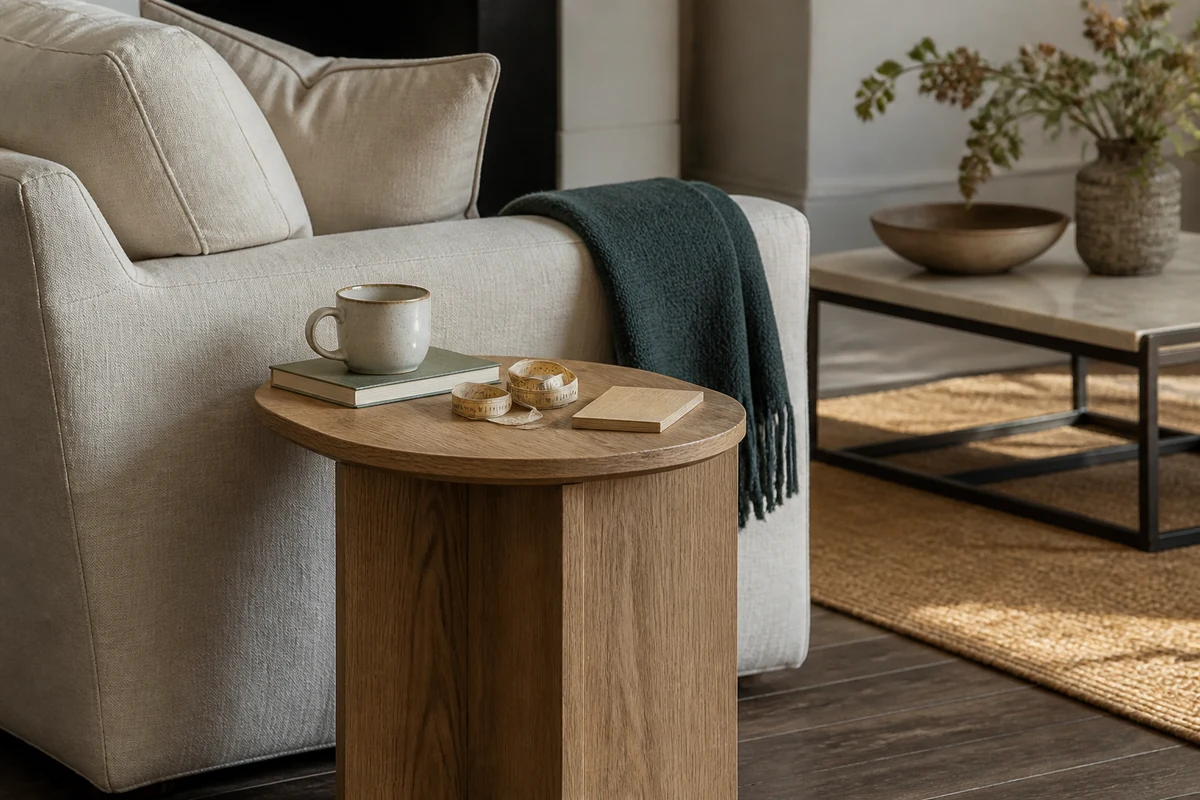
1. Compact oak-look side table
Example: Make a small landing spot beside a sofa or reading chair with this compact side table. Its [verified wood / engineered-wood] top has a [matte / satin] [verified finish], paired with [verified leg material and color]. At [height] × [width] × [depth], it can hold a lamp, a book, or a drink within easy reach. Check the measurements against your seating before ordering. Assembly: [verified requirement]. Care: wipe with a soft, dry cloth; follow the included care guide for spills.
Why it works: The copy begins with a use case, then gives material and exact dimensions. Replace “oak-look” with the accurate product name: a veneer, laminate, solid wood, or printed finish are not interchangeable claims.
2. Upholstered accent chair
Example: Add a comfortable seat to a bedroom corner or living-room reading nook. This accent chair is upholstered in [fabric composition] in [color], with a [verified frame material] frame and [verified cushion construction]. Overall dimensions are [height] × [width] × [depth]; seat height is [measurement]. Review the full measurements to confirm it suits your room and preferred seating height. [Assembly and care details, if confirmed.]
Why it works: Shoppers can assess the silhouette, textile, and scale. Add weight capacity or performance claims only when product documentation supports them.
3. Floating wall shelf
Example: Keep everyday objects visible without using floor space. This [material] wall shelf measures [width] × [depth] × [thickness] and has a [finish] surface. The package includes [verified hardware and components]. Wall type, installation method, and load guidance: [insert manufacturer-approved details]. Confirm these instructions before mounting.
Why it works: Wall fixtures raise installation and load questions. Never guess weight limits or compatibility; use the product’s tested specifications and instructions.
Lighting Description Examples
4. Ceramic table lamp
Example: Bring a warm pool of light to a bedside table, console, or desk with this [glazed / unglazed] ceramic table lamp. The base is [verified color and finish]; the shade is [material and shape]. Overall height: [measurement]. Bulb base, maximum wattage, bulb inclusion, and switch type: [verified specifications]. Place on a stable, dry surface and follow the manufacturer’s electrical and care instructions.
Why it works: The shopper learns the look and the practical buying details. Electrical specifications must come from the manufacturer—do not infer them from an image.
5. Pendant light
Example: Define a dining area or entryway with a pendant featuring a [shape] shade in [verified material and finish]. Shade dimensions: [measurements]; adjustable drop: [range, if confirmed]. Before ordering, check ceiling height, installation requirements, and whether a compatible bulb is included. Installation should follow the product instructions and local requirements.
Why it works: It prompts the shopper to check fit and installation instead of promising that the fixture works in every room.
Rugs and Textile Description Examples
6. Textured area rug
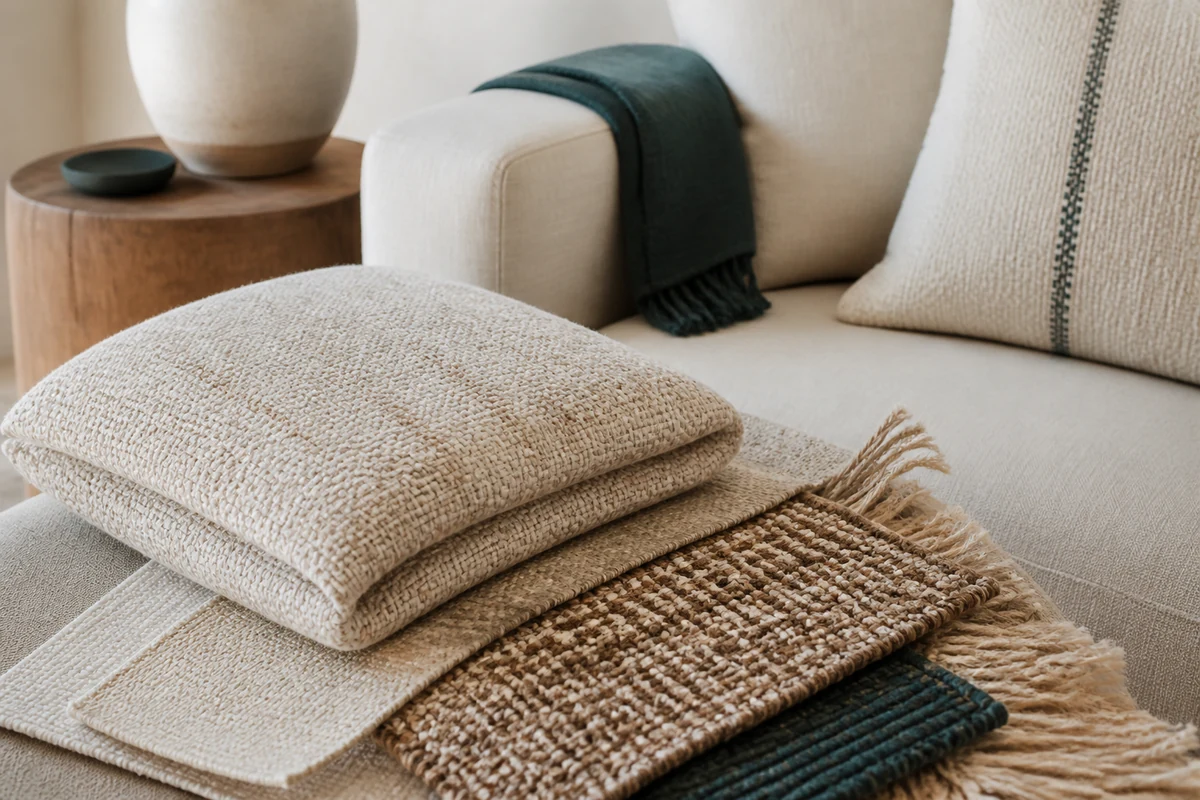
Example: Add a layer of texture beneath a coffee table or at the foot of a bed with this [weave / pile] rug in [color palette]. Made from [verified fiber composition], it measures [length] × [width] and has a [verified backing]. Use a rug pad if recommended for your floor type. Cleaning method: [manufacturer-approved instructions]. Actual color may vary by screen and lighting; refer to the product photos and sample options if available.
Why it works: Fiber, construction, size, backing, and cleaning are more useful than unsupported adjectives such as “indestructible” or “stain-proof.”
7. Linen-blend cushion cover
Example: Refresh a sofa or bed with a cushion cover in [color / pattern]. The fabric composition is [exact verified percentages], and the cover measures [size]. It closes with a [zipper / envelope closure]. Insert [included / sold separately—confirm]. Care: [verified wash instructions]. Slight differences in pattern placement may occur between pieces if that is accurate for this item.
Why it works: A shopper can distinguish a cover from a filled cushion, check sizing, and understand care before checkout.
Wall Decor and Small Accent Examples
8. Framed art print
Example: Add a graphic focal point to a hallway or gallery wall with this [subject / style] print. The artwork measures [print dimensions]; the framed size is [overall dimensions]. Frame material and finish: [verified details]. Choose [available orientation or size options]. Hanging hardware: [included / not included—confirm]. Colors can appear different across screens, so use the listing images as a guide rather than a color guarantee.
Why it works: It separates print size from frame size and clarifies what arrives in the package.
9. Stoneware vase
Example: Display a few stems or let this [shape] stoneware vase stand on its own on a shelf or dining table. It measures [height] × [width] and has a [glaze / surface] finish in [color]. Opening diameter: [measurement]. Water suitability and cleaning instructions: [manufacturer-confirmed details]. Each piece [has / does not have] individual finish variation—include this only if it reflects the product.
Why it works: Shape, opening, dimensions, and care help people assess how the object will function, not just how it photographs.
10. Decorative mirror
Example: Make a wall feel more open with this [shape] mirror, finished with a [material / color] frame. Overall dimensions: [height] × [width] × [depth]. Mirror dimensions: [measurements, if useful]. Mounting orientation, hardware, and installation guidance: [verified details]. Check the wall and mounting instructions before installation.
Why it works: Clear measurements and mounting details matter more than broad claims about changing a room’s light or size.
Before-and-After: Turn a Vague Description Into Clear Copy
Before: “Beautiful modern vase. High quality and perfect for any home. Makes a great gift.”
After: “Display fresh stems or a few dried branches in this [height]-inch [material] vase with a [finish] surface. Its [shape] silhouette suits a console, dining table, or open shelf. Opening diameter: [measurement]. Confirm water suitability and care instructions in the product details. Gift packaging: [include only if available].”
The revision swaps broad praise for verifiable details and realistic placement ideas. “Perfect for any home” is not a useful promise; a shopper benefits more from dimensions and an honest explanation of the item’s finish and use.
A Simple Template You Can Reuse
Bring [visual or functional benefit] to [room / placement] with this [specific product type]. Made from [verified material] with a [finish / construction] detail, it measures [dimensions] and comes in [available colors or sizes]. Use it for [realistic use case]. [Care, assembly, installation, or what is included]. Check [fit or compatibility detail] before ordering.
Keep the opening sentence about the object and its role. Put the facts that help a shopper choose next. End with practical information, not an unsupported guarantee. Adapt the order to the product: dimensions belong high in the copy for furniture and rugs, while bulb compatibility belongs near the top for lighting.
Adapt Your Copy for Different Storefronts
Your core facts should stay consistent across channels, but the presentation can change. A direct-to-consumer page may use short paragraphs, scannable bullets, and a placement suggestion. A marketplace listing may require specific fields, title rules, or character limits; check the current seller documentation before publishing. Etsy sellers can foreground craft process and variation only when those details are accurate. Shopify merchants can use structured sections for dimensions, materials, care, shipping, and returns.
Do not let platform-specific phrasing change the actual product facts. A product cannot become solid wood on one channel and wood-look on another. Keep a source of truth for dimensions, composition, included parts, and care, then edit for each channel’s format.
For a broader method, see the home decor product description guide, the product description template, and our Amazon listing optimization guide. To draft from a product photo, try the AI product description tool; review every generated detail against your product records before publishing.
A Fast Editing Checklist
Before you publish, ask:
- Can a shopper identify the object and its main distinguishing feature in the first sentence?
- Are material, finish, color, dimensions, and package contents accurate and specific?
- Are all units clear and measurements labeled correctly?
- Does the copy distinguish included items from accessories shown in photos?
- Are assembly, care, installation, and compatibility details confirmed?
- Have you removed unsupported claims such as “non-toxic,” “sustainable,” “handmade,” “stain-proof,” or “built to last” unless you have evidence and the wording is appropriate?
- Does the description help someone picture a realistic placement without promising universal fit?
- Does every marketplace version comply with that platform’s current rules?
The Federal Trade Commission’s guidance says advertising must be truthful and not misleading, and claims should have support. Review the FTC advertising and marketing guidance when making objective claims about materials, performance, environmental attributes, or product benefits. This is general information, not legal advice.
Frequently Asked Questions
How long should a home decor product description be?
There is no single ideal length for every product or platform. Include enough detail to answer likely questions—often a short opening paragraph followed by scannable specifications. Follow any marketplace limits and prioritize facts that affect fit, use, care, and purchase decisions.
What details matter most in a furniture description?
Start with the product type and use, then give verified materials, finish, overall dimensions, assembly requirements, and care. Include seat height, weight, or load information when relevant and supported by product documentation.
Should I include dimensions in the product description?
Yes, when size affects fit or use. List the exact measurements with units and label them—for example, overall dimensions versus seat height. Never estimate from a photograph.
Can I use AI to write home decor product descriptions?
AI can help turn supplied product information or an image into a first draft. It may misidentify materials, dimensions, finishes, or included accessories, so verify every factual statement against product records before publishing. ImageChat’s product description generator is a drafting aid, not a substitute for checking specifications.
How do I describe a product when some specifications are missing?
Do not fill gaps with guesses. Ask the supplier or product team, consult approved documentation, or leave the uncertain detail out until confirmed. Clearly state verified information and avoid implying features the product may not have.
How can descriptions reduce confusion and avoidable returns?
Use clear measurements, material names, package contents, color context, care instructions, and installation or assembly notes where applicable. Accurate information can help shoppers make a better-informed choice, but it cannot guarantee a particular return rate or outcome.
Write Clearer Copy From Your Product Photos
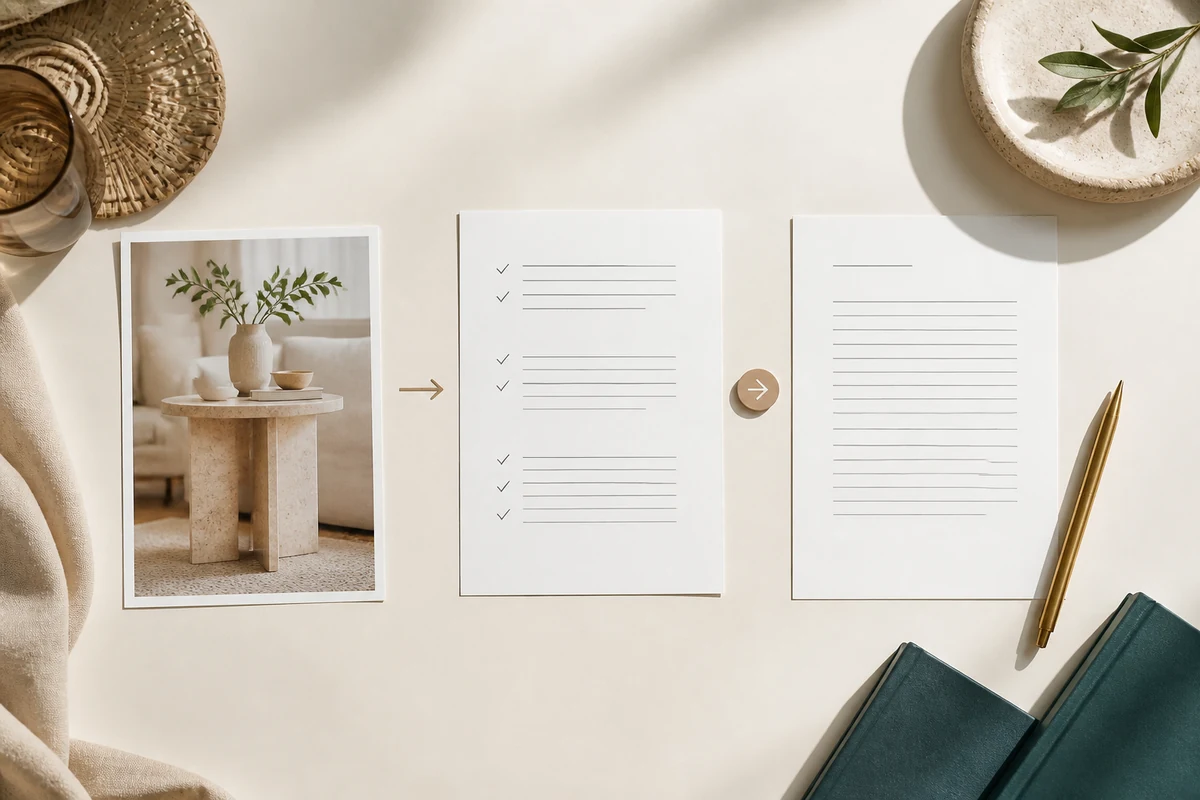
A photo can be a helpful starting point for a first draft, especially when you have many listings to prepare. Use ImageChat to generate a product-description draft, then compare it with your verified specifications and revise for your customers, brand voice, and storefront requirements.
Try the AI Product Description Generator →
No draft should go live without a human check of factual details. Keep your product data as the source of truth; use the generated copy to save time on structure and phrasing, not to certify materials, measurements, or performance.
---
Frequently Asked Questions
How long should a home decor product description be?
There is no single ideal length for every product or platform. Include enough detail to answer likely questions—often a short opening paragraph followed by scannable specifications. Follow any marketplace limits and prioritize facts that affect fit, use, care, and purchase decisions.
What details matter most in a furniture description?
Start with the product type and use, then give verified materials, finish, overall dimensions, assembly requirements, and care. Include seat height, weight, or load information when relevant and supported by product documentation.
Should I include dimensions in the product description?
Yes, when size affects fit or use. List the exact measurements with units and label them—for example, overall dimensions versus seat height. Never estimate from a photograph.
Can I use AI to write home decor product descriptions?
AI can help turn supplied product information or an image into a first draft. It may misidentify materials, dimensions, finishes, or included accessories, so verify every factual statement against product records before publishing. ImageChat’s product description generator is a drafting aid, not a substitute for checking specifications.
How do I describe a product when some specifications are missing?
Do not fill gaps with guesses. Ask the supplier or product team, consult approved documentation, or leave the uncertain detail out until confirmed. Clearly state verified information and avoid implying features the product may not have.
How can descriptions reduce confusion and avoidable returns?
Use clear measurements, material names, package contents, color context, care instructions, and installation or assembly notes where applicable. Accurate information can help shoppers make a better-informed choice, but it cannot guarantee a particular return rate or outcome.
Write Clearer Home Decor Product Copy
Create a first draft from a product photo, then verify every material, measurement, and care detail against your product records.
Try the AI Product Description Generator →For objective product claims, see the FTC advertising and marketing guidance.