
Why Home Decor Descriptions Are Different
Home decor is a category where shoppers buy with their eyes first and their logic second. They fall in love with a lamp or a vase because it looks right in a photo, then they read the description to decide whether it will actually work — whether it is the right size, whether the material feels cheap or solid, whether the color matches their room. A home decor description has to bridge the gap between the visual appeal of a product photo and the practical questions that determine whether the shopper clicks add to cart or keeps scrolling.
Consumer Psychology in Home Decor Purchases
According to Statista, the global online home decor market is projected to reach over 200 billion U.S. dollars by 2028, with product information quality cited as a top factor in purchase decisions alongside price and visual content. When a decor description is thin — missing dimensions, vague about materials, or silent on care instructions — the shopper assumes the product is low quality or that the seller does not know their own merchandise. Conversely, a description that demonstrates real material knowledge and helps the shopper imagine the piece in context signals that the brand curates with intention.
Three psychological levers matter most in home decor copy:
- 1. Spatial visualization.Home decor buyers need to picture the item in a specific room. Descriptions that provide exact dimensions, scale references (“fits comfortably on a standard 48-inch round dining table”), and placement suggestions help the shopper mentally place the object before it arrives. Without this, the shopper guesses — and guesses lead to returns.
- 2. Material credibility.Words like “solid oak,” “hand-thrown ceramic,” “powder-coated steel,” and “linen-blend upholstery” tell the shopper what they are actually buying. Vague terms like “premium materials” or “high-quality construction” signal nothing. In a category where material quality directly determines durability and price perception, specificity is the difference between trust and skepticism.
- 3. Style context.A decor piece does not exist in isolation — it joins a room. Descriptions that name the design style (“mid-century modern,” “Scandinavian minimalist,” “industrial loft”) and suggest complementary pieces help the shopper see how the item fits their existing aesthetic. This is especially powerful when paired with lifestyle imagery showing the product in a styled room setting.
Home Decor Description Elements Checklist
Every home decor product description should cover these elements, though the emphasis shifts by category and platform:
| Element | What It Covers | Why It Matters |
|---|---|---|
| Materials | Primary and secondary materials, construction method | The #1 quality signal for decor buyers |
| Dimensions | Exact height, width, depth, and weight | Prevents size-related returns — the top return reason |
| Color and finish | Exact color name, finish type (matte, glossy, natural) | Screens render color differently; specificity reduces mismatch |
| Style and aesthetic | Design style, room type, decorative role | Helps shopper visualize the piece in their space |
| Care instructions | Cleaning method, maintenance frequency, durability notes | Sets expectations for upkeep and longevity |
| Assembly | Whether assembly is required, tools needed, time estimate | Eliminates a major purchase objection |
| Origin and sustainability | Where it was made, eco-certifications, small-batch status | Builds trust with values-driven buyers |

Platform-Specific Adaptation
The core product information stays the same across marketplaces, but the format, length, and emphasis change. What works on Amazon will look sparse on Etsy, and what feels right on Shopify may not maximize Amazon’s search algorithm. Here is how to adapt a single home decor product description for the three major platforms.
Amazon Home Decor Descriptions
Amazon rewards structure and discoverability. Home decor is a highly visual category on Amazon, but the description itself must serve the search algorithm while giving the shopper enough practical detail to buy with confidence.
Title:Amazon allows up to 200 characters for home decor titles, but the first 60–80 characters carry the most weight for search. Lead with brand, then product type, then key attributes (material, color, size). Example: “BrandName Hand-Thrown Ceramic Vase — Matte White, 10 inch Tall, for Table and Shelf Decor.” Avoid subjective claims like “beautiful” or “stunning” in the title — Amazon’s guidelines discourage promotional language in titles.
Bullet points:You get five bullets. Each should lead with a benefit or key attribute, then back it with a material or construction detail. Prioritize material quality, dimensions, color and finish, care and durability, and style suitability. Amazon’s A9 algorithm reads bullets for keywords, so include relevant search terms naturally — “ceramic vase,” “farmhouse decor,” “modern table centerpiece” — but never repeat the same phrase across bullets. For deeper optimization, see our Amazon title optimization guide.
Description text:Keep it under 2,000 characters. Use paragraphs to tell a brief product story — the material, the making, the moment it creates in a room. Avoid walls of text. Amazon’s guidelines prohibit subjective superlatives without context, so instead of “the best vase you will ever own,” write “hand-thrown by potters in Portugal using traditional wheel techniques.”
Backend keywords:Use the five backend search terms slots for synonyms and variations that do not fit naturally in the visible copy — alternative material names, room types, style synonyms, holiday uses. Separate terms with spaces, not commas.
Shopify Home Decor Descriptions
Shopify gives you full control over formatting, so you can create a richer, more brand-driven experience than Amazon allows. For home decor, this freedom is especially valuable because lifestyle imagery and material close-ups drive conversions more than spec lists.
Length and structure:Aim for 200–400 words of description text. Use subheadings (H2 or H3) to break it into scannable sections — “Materials,” “Dimensions,” “How to Style,” “Care.” Shoppers on a brand’s own site are already further along the funnel than Amazon browsers, so you can lead with brand story and design philosophy rather than keyword density.
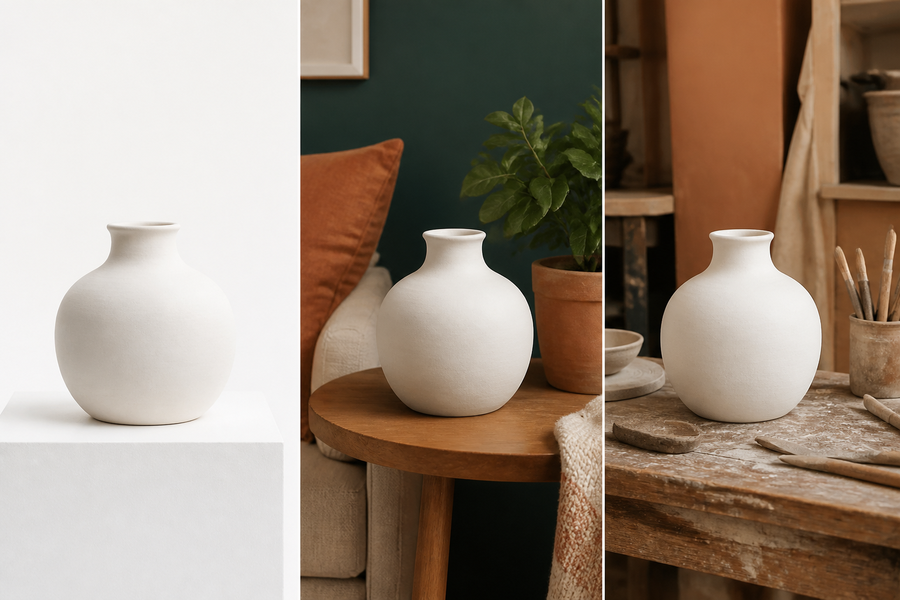
Visual integration: Shopify lets you embed material detail shots, room styling photos, and customer photos directly in the description area. Use this. A home decor description on Shopify should pair text with at least one lifestyle image showing the product in a styled room setting, plus a material close-up that shows texture and finish.
SEO:Shopify pulls your description into the page’s meta description by default. Write the first 155 characters as a self-contained summary that includes the product type and key material. For platform-wide SEO strategy, refer to our Shopify SEO guide.
Etsy Home Decor Descriptions
Etsy buyers shop for handmade, vintage, and small-batch home decor. The tone should feel personal and transparent even when you sell at scale.
Tone:Write conversationally, as if describing the piece to a friend who asked about it. First-person voice (“I hand-throw each vase on the wheel, then fire it at 1280°C for durability”) works well for maker-brands. If you are a larger brand, use warm third-person but keep it human and process-focused.
Tags and materials:Etsy’s search relies heavily on tags (13 available) and the materials field. List every material, technique, and style descriptor. “Hand-thrown stoneware ceramic, matte white glaze, food-safe, dishwasher-safe, farmhouse, minimalist, Scandinavian, boho” gives Etsy’s algorithm far more to match against than “white vase.”
Length:150–300 words is typical. Lead with the making story or design inspiration, then cover the practical details — materials, dimensions, color, care, shipping. For more on Etsy-specific optimization, see our Etsy listing description guide.
How to Structure a Home Decor Product Description
A strong home decor description follows a predictable flow: it identifies the product and its material, explains how it fits into a room, describes the sensory and visual experience, and closes with practical details that prevent returns. Here is a structure that works across platforms, with the emphasis adjusted to fit each one.
1. Title: Lead With the Product Type and Material
The title is the first thing a shopper and a search engine see. Put the product type and the most important material or style first, then add supporting details.
Weak:“Beautiful Decorative Vase for Home”
Good:“Hand-Thrown Ceramic Vase — Matte White, 10 inch, Table and Shelf Decor”
The first tells the algorithm and the shopper exactly what the product is, what it is made of, and where it goes. The second wastes the most valuable real estate on a subjective adjective that could describe anything. On Amazon, include brand name at the start. On Shopify, you can be more editorial — “The Matte White Stoneware Vase” — as long as the meta description and URL slug contain the searchable terms.
2. Bullet Points: Benefit First, Material Second
Each bullet should start with what the shopper gains, then explain how the material or construction delivers it.
- • Durable stoneware:“Hand-thrown from premium stoneware clay and high-fired at 1280°C — resists chipping and cracking for years of daily use.”
- • Versatile sizing:“10 inches tall with a 5-inch opening — fits standard grocery-store bouquets and stands tall enough to anchor a console table or mantel.”
- • Matte white finish:“Glazed in a soft matte white that catches light without glare — complements both warm and cool color palettes without clashing.”
- • Easy to clean:“Smooth glazed interior is waterproof and food-safe — rinse with warm water and mild soap. No special maintenance required.”
- • Handmade character:“Each piece carries subtle variations in glaze and form — the marks of a real potter’s hand, not a factory mold.”
Notice that each bullet answers a shopper question: What is it made of? Will it fit? Does the color work? Is it hard to maintain? Is it actually unique?
3. Lifestyle and Emotional Connection: The Room Paragraph
After the bullets, write one short paragraph that places the product in a room. This is where home decor copy earns its keep.
“Picture this vase on an entryway console, catching afternoon light through a west-facing window. A few dried eucalyptus stems, or nothing at all — it holds its own empty. The matte white glaze picks up the warm tones of an oak table beneath it and stays cool against a linen runner. It is the kind of piece that makes a corner feel finished without trying too hard.”
This paragraph should be 50–80 words. It does not need to mention every spec. Its job is to make the shopper see the product in their space.
4. Practical Details: The Trust Section
Close with the factual details that prevent returns and build trust: exact dimensions (height, width, depth, opening size, weight), material composition, color name and finish type, care instructions, assembly requirements (if any), and origin. Format these as a clean list or table, not as prose. Shoppers who have decided to buy will scan this section to confirm their choice. Shoppers who are undecided will use it to eliminate doubts.
Common Home Decor Description Mistakes
Even experienced sellers fall into these traps. Each one suppresses conversions or increases returns.
1. Omitting Exact Dimensions
Home decor returns are overwhelmingly driven by size mismatch — the vase was too small for the mantel, the lamp was too tall for the side table, the rug did not cover the area the shopper expected. Product not matching the description is a top return driver in online shopping, and in home decor, the most common mismatch is size. Always list height, width, depth, and weight. Add a scale reference (“fits on a standard 12-inch shelf”) so the shopper does not have to do the math.
2. Using Vague Material Descriptions
“Premium materials,” “high-quality construction,” and “durable design” tell the shopper nothing. A ceramic vase could be earthenware, stoneware, or porcelain — each with different durability and price points. A wooden shelf could be solid oak, oak veneer, or MDF with an oak-patterned laminate. Name the actual material. If you do not know, find out before writing the description.
3. Ignoring Color Accuracy
Screens render color differently, and home decor shoppers are particularly sensitive to color mismatch because the piece has to coordinate with existing furnishings. Use specific color names — “warm white with ivory undertones” rather than “white” — and note whether the finish is matte, satin, or glossy. If the color shifts under different lighting, say so. A single lifestyle photo in natural light does more for color confidence than any paragraph, but the text should reinforce what the photo shows.
4. Skipping Care and Maintenance
A shopper who buys a linen-upholstered bench needs to know it is not machine-washable. A shopper who buys an unlacquered brass candleholder needs to know it will develop a patina over time. Omitting care instructions leads to disappointed buyers who expected low maintenance and got something that requires regular attention. Include care guidance as a standard element, not an afterthought.
5. Writing Generic Copy Across Products
If every item in your store has the same “elevate your space with this stunning piece” description, shoppers cannot tell products apart. Each description should highlight what makes that specific product worth buying — its material, its scale, its place in a room, the way it was made. Generic copy signals a drop-shipper who has never handled the product. Specific copy signals a curator who knows their merchandise.
Write Home Decor Descriptions in Seconds
ImageChat’s Product Description Generator turns a product photo and a few details into a structured draft — title, bullets, material highlights, lifestyle copy, and care instructions — ready for you to review and publish.
Generate Home Decor Product DescriptionsFrequently Asked Questions
How long should a home decor product description be?
It depends on the platform. Amazon descriptions should stay under 2,000 characters. Shopify product pages typically use 200–400 words. Etsy listings range from 150–300 words. The goal is not length but completeness — every essential detail (materials, dimensions, color, care, style) should be present without padding.
What keywords should I include in a home decor product description?
Include the product type (e.g., “ceramic vase”), the material (e.g., “stoneware”), the style (e.g., “modern,” “farmhouse”), the room or placement (e.g., “table decor,” “shelf decor”), and the color. Use tools like Google Keyword Planner or your platform’s search suggestions to find natural variations. Avoid forcing every variation into the visible copy — put extras in backend fields on Amazon or tags on Etsy.
How do I handle color accuracy in product descriptions?
Use specific, descriptive color names rather than generic ones. “Warm white with ivory undertones” is more useful than “white.” Note the finish type (matte, satin, glossy) and mention if the color shifts under different lighting. Pair the text with at least one lifestyle photo shot in natural daylight. If the product comes in multiple colors, describe each one individually rather than listing color names in a dropdown.
Should I include assembly instructions in the description?
Yes, if assembly is required. State it clearly — “Requires minimal assembly, 10 minutes, Allen key included” — so the shopper knows what to expect before the box arrives. If the product ships fully assembled, say so explicitly. Assembly surprises are a common source of negative reviews, and transparency here builds trust.
Can AI write home decor product descriptions?
AI tools like ImageChat’s Product Description Generator can draft a complete description from a product photo or basic inputs — title, bullets, material highlights, lifestyle paragraph, and care instructions. Use the output as a starting point, then edit for accuracy, brand tone, and material specificity. AI is fastest at producing the structural elements, while human review ensures material claims are correct and dimensions are verified.
How do I describe scale so the shopper knows the size?
Provide exact dimensions in inches and centimeters, then add a relatable reference. “10 inches tall — about the height of a standard wine bottle” or “18-inch diameter — fits a 48-inch round dining table with room for plates and glassware.” Scale references help shoppers who struggle to visualize dimensions from numbers alone. A product-in-context photo is the strongest scale cue, but text references fill the gap when lifestyle imagery is not available.
How do I reduce returns through better home decor descriptions?
Focus on dimensions, color accuracy, and material expectations. List exact measurements with scale references, describe colors precisely with finish types, and name materials explicitly so the shopper knows what they are getting. Include care instructions and assembly details. Product not matching the description is a top return driver in online home decor — precise descriptions address this directly.
How often should I update home decor product descriptions?
Review descriptions whenever you change suppliers, materials, finishes, or dimensions. Also update when you notice patterns in return reasons or customer questions — if multiple shoppers ask whether a vase is food-safe, that information belongs in the description, not buried in reviews. Seasonal updates are also valuable: note if a piece works as a holiday centerpiece or a summer mantel accent.
Generate Home Decor Product Descriptions With ImageChat
Paste a product image, add the category and key attributes, and get a platform-ready description in seconds. Edit the tone, adjust the length, and verify material accuracy and dimensions before it goes live.
Generate Home Decor Product DescriptionsRelated Resources
- Product Description Generator — Create descriptions from product images
- Beauty Product Description Guide — Write beauty descriptions that convert
- Fashion Product Description Guide — Write clothing descriptions that sell
- Electronics Product Description Guide — Sell more tech with better descriptions
- Amazon Title Optimization Guide — Write Amazon titles that rank
- Shopify SEO Guide — Optimize your Shopify store for search
- Etsy Listing Description Guide — Write Etsy descriptions that convert
- SEO Metadata Generator — Generate titles, descriptions, and keywords
References
- Statista: Online Shopping Return Reasons — Data on why shoppers return online purchases
- Statista: Global Home Decor Market Size — Market size and growth projections for online home decor sales