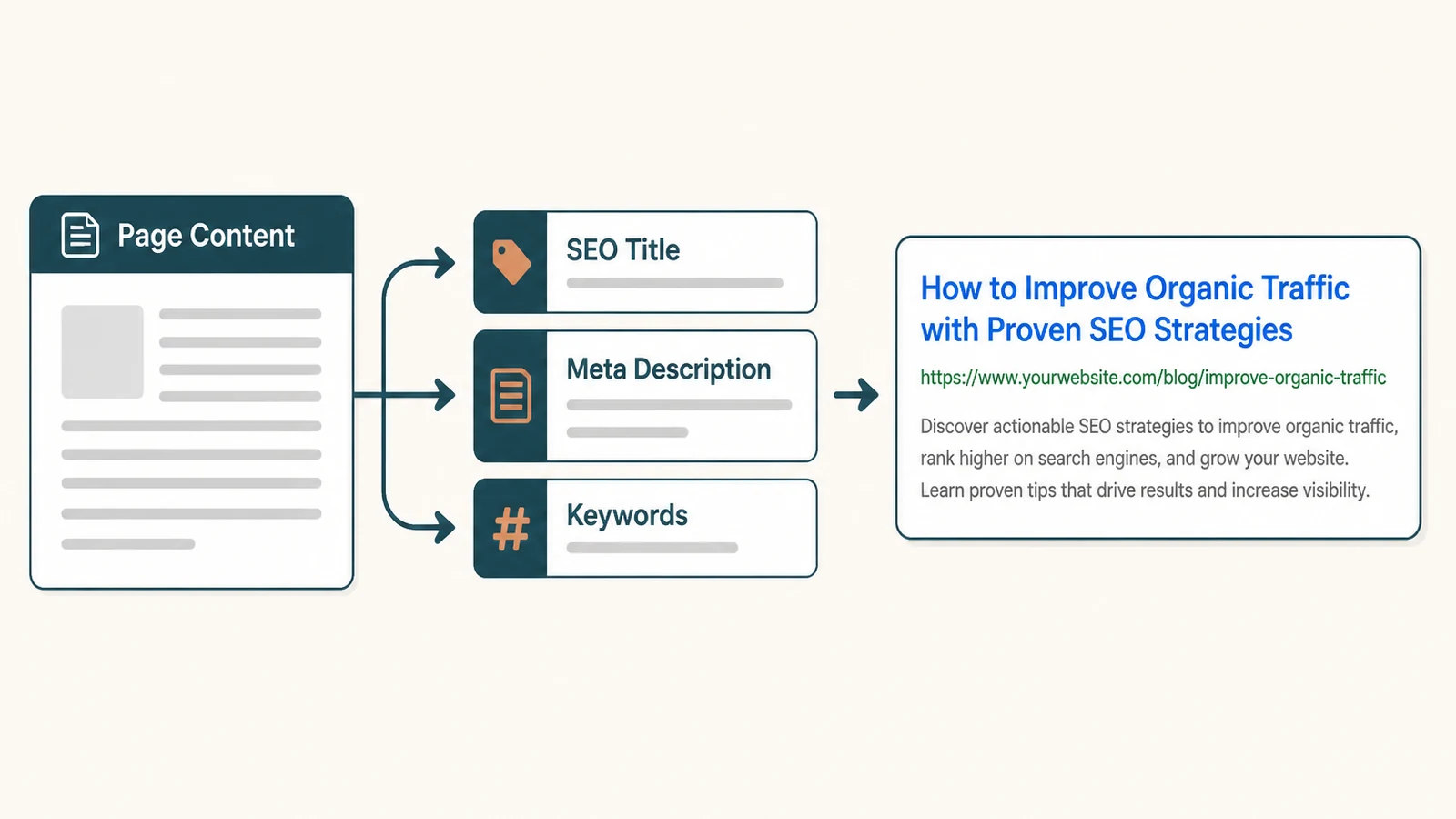
A strong page can still be overlooked when its search snippet is unclear. ImageChat gives you a practical first draft without making you start from an empty field. Paste a product page, blog post, landing page, or service description, and keep control of the final wording.
What you get
- One clear SEO title for the page
- A concise meta description with a useful CTA
- Primary and supporting keyword ideas
- Suggestions grounded in your actual content
- Easy-to-edit output for any CMS
- A quick starting point for new and existing pages
What Is an SEO Metadata Generator?
An SEO metadata generator drafts the information search engines and social platforms use to understand and preview a web page. The core fields are the SEO title, meta description, and keyword ideas. Together, they describe what a page is about and give searchers a reason to choose it.
The title should make the topic obvious. The description should explain what a visitor will find. Keyword suggestions are a planning aid, not a list to paste everywhere. ImageChat removes the slowest part—summarizing a page in a few precise lines—while leaving editorial judgment with you.
The Three Metadata Fields That Matter Most
SEO title: make the topic obvious
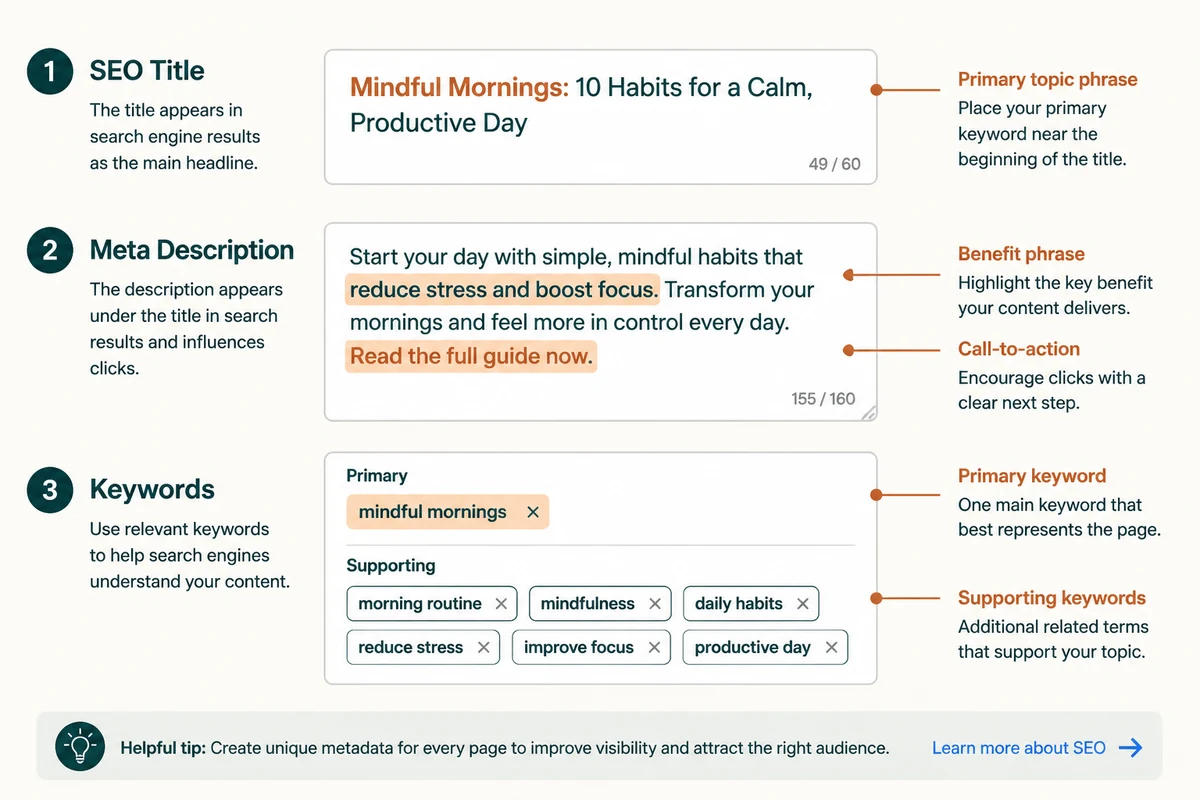
Aim for about 50–60 characters where practical. Put the main topic near the beginning, make the promise specific, and avoid repetitive wording.
Meta description: explain the next click
Aim for about 150–160 characters, prioritizing clarity. State what the page does, mention the benefit, and give the reader a natural next step.
Keywords: map the language of the page
Start with one primary topic and a small set of related phrases. Use suggestions to guide headings, copy, and internal links—not to force a keyword string into the page.
Why SEO Metadata Is Important
Search results are often the first contact someone has with your brand. Clear metadata sets an accurate expectation and helps the right visitor recognize a page’s relevance before they open it. Distinct titles and descriptions also make it easier for teams to audit a large site.
Metadata works best with helpful content, descriptive URLs, clear headings, internal links, and a page experience that delivers on the snippet’s promise. For technical guidance, see Google’s title link documentation and snippet guidance.
How to Generate SEO Metadata in ImageChat
1. Add the page content.
Paste the draft, product details, article outline, or landing-page copy. Include the page’s actual purpose rather than only a list of keywords.
2. Describe the audience and target topic.
Add the primary search phrase, intended audience, and action you want visitors to take.
3. Review, refine, and publish.
Check that every claim is accurate, choose the clearest version, then add the fields in your CMS and preview on mobile and desktop.
SEO Metadata Examples
The output should change with the page’s intent. These original examples show the difference between a product page, an educational article, and an online tool.
FAQ
What is the difference between an SEO title and a meta description?
The SEO title is the main clickable headline shown in search results and browser contexts. The meta description is the supporting summary beneath it. The title identifies the page; the description explains its value and sets expectations.
How long should an SEO title be?
Aim for about 50–60 characters where practical, but prioritize a specific, readable title. Search results vary by device and query, so put the important words first.
How long should a meta description be?
Use roughly 150–160 characters as a starting point, then read it as a complete, accurate sentence. Search engines may rewrite or truncate descriptions.
Do keywords in metadata improve rankings?
Keyword suggestions help you understand search intent, but the old keywords meta tag is not a ranking shortcut. Use relevant phrases naturally in helpful, visible content.
Can I use generated metadata on any type of page?
Yes. Use it as a starting point for product, category, blog, landing, documentation, and service pages. Always edit it to reflect the exact page and claims you can support.
Will search engines always show my title and description?
No. Search engines may rewrite a title or choose another page excerpt when it better matches a query. Clear metadata still gives them an accurate default.
Generate Your SEO Metadata Now
Paste your page content, add the audience and target topic, and get a focused metadata draft you can review in seconds.
Open the ImageChat Tool →