
What Is Multi-Platform Selling and Why It Matters
Multi-platform selling means offering the same products through more than one sales channel: marketplaces such as Amazon, Etsy, eBay, and Walmart Marketplace, plus your own branded store. Each channel has its own audience, search behavior, and rules, so the same product should appear slightly differently everywhere.
- More buyers: every channel reaches an audience your single storefront may never touch.
- Resilience: multiple channels reduce the impact of algorithm updates, fee increases, or account issues.
- Smarter decisions: selling in several places reveals which products and descriptions win in different contexts.
The catch is operational. A second channel can double listing, inventory, and support work unless you build a repeatable system first.
Choose the Right Platforms for Your Products
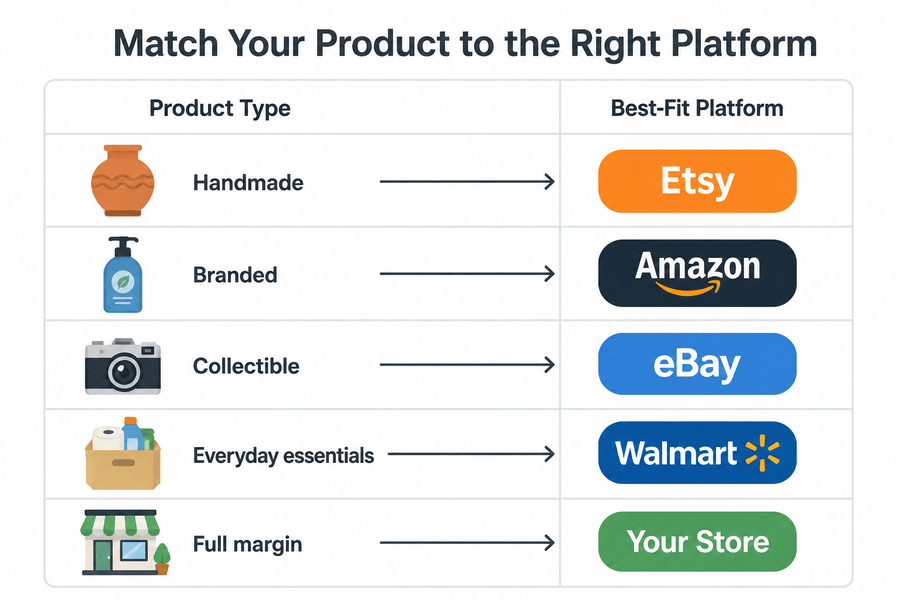
Do not join every marketplace at once. Pick two or three channels with natural demand for your product, then master them before expanding.
| Platform | Best for | Watch out for |
|---|---|---|
| Amazon | Broad, search-driven products | Competition, fees, and ranking pressure |
| Etsy | Handmade, vintage, personalized items | Story, photos, and shop trust matter |
| eBay | Collectibles, refurbished goods, electronics | Item specifics drive search |
| Walmart Marketplace | Household goods and everyday essentials | Higher application bar |
| Your own store | Any product and long-term brand building | You must drive your own traffic |
Build Your Strategy in 5 Steps
Master one channel before you expand
Know your best sellers, real margins, and which keywords and photos convert. A product that cannot win on one platform will not win on four.
Expand to channels your product fits
Use demand signals, competitor pricing, and buyer intent to choose the next platform. Test with top sellers before porting the whole catalog.
Adapt listings instead of copy-pasting
Amazon rewards front-loaded titles and bullets; Etsy responds to tags and story; a Shopify store needs pages for humans and Google. See our Amazon Listing Optimization Guide, Etsy Listing Description Guide, and Shopify SEO Guide.
Sync inventory, orders, and fulfillment
Use tools that update stock in real time and route orders through one fulfillment workflow. Overselling creates cancellations and one-star reviews.
Review performance and reinvest
Track revenue, fees, ads, and refunds per channel. Double down where margin per hour is best and review the numbers monthly.

Best Practices and Common Mistakes
- Keep product data clean: attributes such as brand, materials, dimensions, and GTIN prevent suppressed listings.
- Stay consistent on brand but flexible in presentation. Your values stay the same; the format changes per platform.
- Calculate true margin per channel, including fees, shipping, returns, ads, and support time.
- Batch-produce channel-specific copy from shared product data, then review every draft.
- Protect your reputation everywhere with reliable response times and shipping.
Avoid the expensive shortcuts: expanding before mastering your first channel, copying one listing everywhere, ignoring fee differences, failing to sync inventory, and skipping platform-specific keywords.
Frequently Asked Questions
Is selling on multiple platforms worth it?
Yes, for most sellers, once one channel is consistently profitable. Multi-platform selling brings more buyers, reduces single-platform risk, and generates useful data when you expand with a plan.
How do I choose which platforms to sell on?
Match the platform to your product: standardized products do well on Amazon and Walmart, handmade and personalized items fit Etsy, and collectibles suit eBay. Start where demand for your product is strongest.
Can I sell the same product on multiple platforms?
Yes. Keep stock synchronized, avoid undercutting your own channels, and adapt the listing to each platform instead of copying one description everywhere.
How do I avoid overselling across platforms?
Use a channel-management or inventory-sync tool so stock updates everywhere when an order arrives, or maintain separate channel allocations with a buffer. Centralize fulfillment where possible.
How many platforms should a small seller start with?
Start with one proven channel, then add a second that fits your top products. Once both run smoothly for a few months, consider a third.
Start Building Your Multi-Platform Strategy Today
Turn one product image into platform-ready copy while keeping your brand voice consistent.
Generate Listings for Every Platform