What is Etsy SEO?
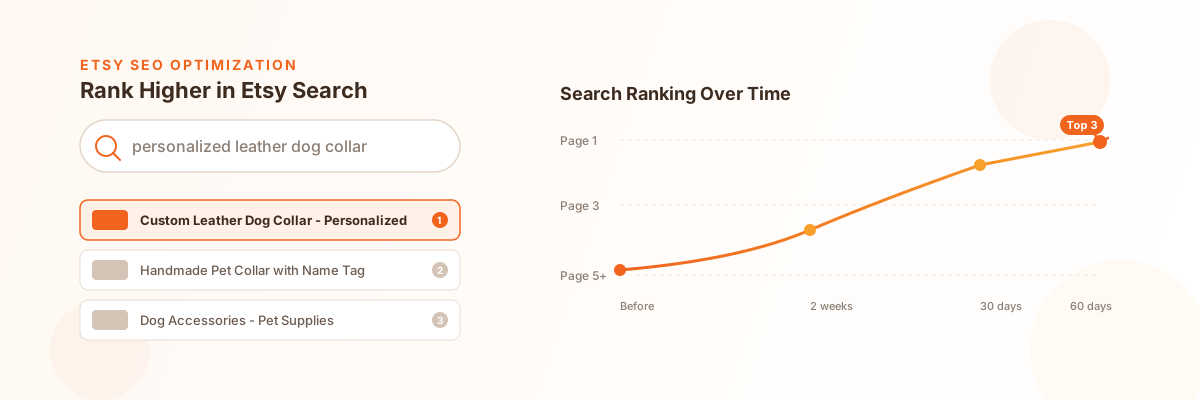
Etsy SEO is the process of optimizing your Etsy listings so they appear higher in Etsy’s search results. When a shopper types a keyword into Etsy’s search bar, the algorithm decides which listings to show and in what order. Your job as a seller is to make sure the algorithm understands exactly what you’re selling and trusts that your listing will satisfy the shopper.
How Etsy Search Works
Etsy search operates in two distinct phases. The first is query matching— Etsy takes the shopper’s search query and finds all listings whose titles, tags, descriptions, and attributes contain matching keywords. If your listing doesn’t include the words a shopper searches for, it won’t appear in results at all.
The second phase is ranking. Etsy sorts the matched listings based on a combination of factors including listing quality scores, customer service metrics, shipping prices, and personalization signals. This is where well-optimized listings pull ahead of the competition.
Etsy also uses Context Specific Ranking (CSR)technology, which personalizes search results based on each shopper’s browsing and purchasing habits. This means two different shoppers searching for the same keyword may see different results.
Etsy Search vs Google Search
While both platforms use search algorithms, the differences matter for your strategy:
- • Etsy is transactional: Shoppers come to buy, so ranking factors emphasize conversion potential and customer satisfaction
- • Google is informational: It ranks content based on authority, backlinks, and relevance to broader queries
- • Etsy rewards recency: New listings may receive a temporary ranking boost so Etsy can test their performance
- • Google rewards longevity: Pages that have accumulated authority over time tend to rank higher
- • Etsy uses 13 tags: A structured tagging system unique to the platform that directly influences query matching
Understanding these differences helps you avoid applying Google SEO tactics that don’t translate to Etsy’s marketplace environment.
Why Etsy SEO Matters
Etsy hosts over 90 million active buyers and millions of sellers competing for their attention. Without SEO, your listings are essentially invisible. A listing on page one of Etsy search results receives dramatically more views and sales than one buried on page ten.
The Direct Impact on Sales
Etsy’s own Seller Handbook emphasizes that search ranking is influenced by factors directly tied to sales performance. Listings that convert well — meaning shoppers click, favorite, and purchase — get pushed higher in results. This creates a positive feedback loop: better SEO leads to more visibility, which leads to more clicks and sales, which further improves ranking.
Conversely, listings with poor SEO stay buried, receive few views, and never build the engagement signals needed to climb. Breaking this cycle starts with getting the fundamentals right.
Traffic Before and After Optimization
Sellers who systematically optimize their listings often see meaningful traffic changes. Common patterns include:
- • Listing views increasing as titles and tags match more search queries
- • Conversion rates improving as listings attract more targeted, high-intent traffic
- • Shop visits growing as individual listing optimization lifts overall shop visibility
- • Revenue per listing increasing as the right buyers find the right products
The key insight is that Etsy SEO is not a one-time task. It requires ongoing attention to search trends, competitor activity, and Etsy’s algorithm updates.
How Image Chat Helps
Image Chat helps Etsy sellers tackle the most time-consuming parts of SEO: writing optimized listing titles, descriptions, and tag combinations. Instead of staring at a blank listing form, you can use Image Chat to generate keyword-aware product descriptions, create multiple title variants for A/B testing, and maintain consistent brand voice across your entire shop. For sellers managing dozens or hundreds of listings, this means faster publishing without falling back on generic copy that doesn’t rank.
How to Optimize Your Etsy SEO
1. Keyword Research
Everything starts with keywords. If you don’t know what shoppers are actually searching for, you can’t optimize effectively.
Where to find Etsy keywords:
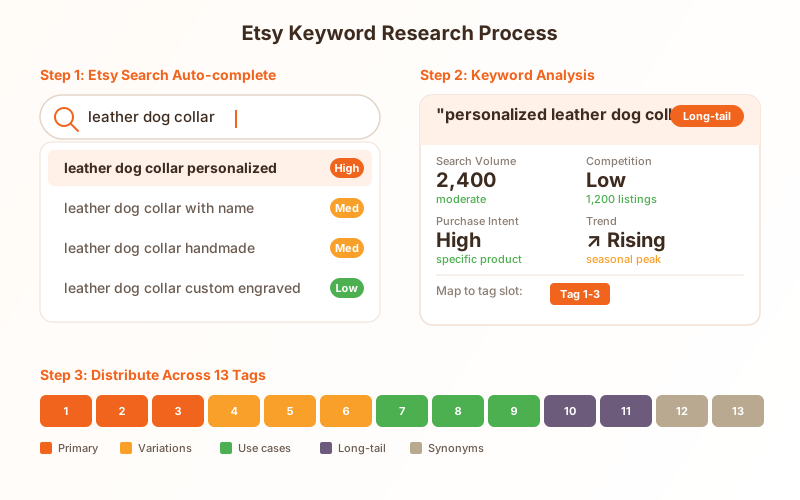
- • Etsy search bar: Type a word and note the auto-complete suggestions. These reflect real shopper searches.
- • Etsy stats: Check your Shop Stats to see which search terms are already bringing traffic to your listings.
- • eRank and Marmalead: Third-party tools that provide keyword volume, competition data, and trend analysis specifically for Etsy.
- • Competitor listings: Study top-ranking listings in your category to see which keywords they target.
Keyword selection tips:
- • Prioritize long-tail keywords (3+ words) over single words. “Personalized leather dog collar” has less competition and higher purchase intent than “dog collar.”
- • Mix high-volume and low-competition keywords across your 13 tags.
- • Check keyword competition before committing. A keyword with 50,000 competing listings is much harder to rank for than one with 2,000.
- • Map each keyword to a specific listing. Avoid having multiple listings compete for the same exact keyword.
2. Title Optimization
Your listing title is the most heavily weighted text element in Etsy’s search algorithm. Etsy weighs title keywords more than tags, so getting your title right is critical.
Best practices for Etsy titles:
- • Place your most important keyword at the beginning of the title. Etsy gives more weight to words that appear earlier.
- • Use all 140 characters, but keep the title readable. A title that reads like a keyword list may match searches but won’t earn clicks.
- • Include multiple keyword phrases naturally. For example: “Personalized Leather Dog Collar with Name - Custom Engraved Pet Collar for Dogs” covers several search queries in one title.
- • Avoid repetitive keyword stuffing. Etsy’s algorithm penalizes titles that repeat the same phrase unnecessarily.
- • Write for shoppers first, algorithm second. A clear, descriptive title earns more clicks than a stuffed one.
Bad: “Blue Mug Coffee Cup Gift”
Good: “Handmade Ceramic Coffee Mug - Personalized Blue Coffee Cup, 12oz Stoneware Mug Gift”
3. Tags Optimization
Etsy gives you 13 tag slots per listing, and each tag can be up to 20 characters. Tags work together with your title to determine which search queries your listing matches. Using all 13 tags is one of the simplest yet most commonly ignored SEO improvements.
Tag strategy framework:
- • Slots 1-3: Primary keywords — Your highest-priority search phrases that match or closely relate to your title.
- • Slots 4-6: Product variations — Materials, style, color, and design descriptors (e.g., “sterling silver,” “minimalist,” “boho”).
- • Slots 7-9: Use cases and occasions — How and when the product is used (e.g., “wedding gift,” “anniversary present,” “everyday wear”).
- • Slots 10-11: Long-tail phrases — Specific, low-competition phrases that attract targeted buyers (e.g., “personalized name necklace gold”).
- • Slots 12-13: Regional and synonym terms — Alternative phrasings shoppers might use (e.g., “custom jewellery UK,” “engraved pendant”).
Tag rules to remember:
- • Use multi-word phrases instead of single words. “Ceramic coffee mug” is far more effective than “mug.”
- • Don’t repeat words already in your title unless they’re part of a different phrase.
- • Tags are not case-sensitive, but exact phrase matches rank better.
- • Avoid using the same 13 tags across all your listings. Diversify to capture different search queries.
4. Description Optimization
While descriptions carry less direct SEO weight than titles and tags, they influence two critical ranking factors: listing quality score and conversion rate. A well-written description helps shoppers make purchasing decisions, which improves your listing’s performance metrics.
What to include in your description:
- • First 160 characters: Lead with your primary keyword and a compelling hook, as this text may appear in search previews.
- • Product details: Dimensions, materials, weight, and care instructions.
- • Personalization options: Clearly explain what buyers can customize and how.
- • Shipping timeline: Set clear expectations to reduce disputes and improve satisfaction.
- • Secondary keywords: Weave relevant keywords naturally throughout the description without stuffing.
- • FAQ answers: Address common buyer questions to reduce messages and improve conversion.
Use Image Chat to draft descriptions that balance SEO keywords with persuasive, benefit-focused copy that actually converts browsers into buyers.
5. Attributes Optimization
Attributes are the structured product details you select when creating a listing — things like color, material, occasion, and style. Etsy uses attributes as filtering options in search, and listings with complete attributes appear in more filtered searches.
Why attributes matter:
- • Shoppers frequently use Etsy’s filter sidebar to narrow results by color, price, material, or occasion.
- • If your listing is missing an attribute, it won’t appear when a shopper filters for that property.
- • Attributes work alongside tags to provide the algorithm with a complete picture of your product.
- • Etsy may auto-assign attributes based on your category, but you should review and complete all available fields manually.
Fill in every applicable attribute, even ones that seem obvious. The more complete your listing data, the more search queries and filter combinations it can match.
6. Image Optimization
Image quality affects Etsy SEO indirectly but powerfully. Listings with high-quality photos earn more clicks, favorites, and sales, which feeds back into Etsy’s listing quality score.
Image best practices for SEO:
- • Use at least 5 photos per listing. Etsy’s algorithm favors listings with comprehensive photo coverage.
- • Include a clear primary photo that shows the product against a clean background.
- • Add lifestyle photos showing the product in use to help shoppers visualize ownership.
- • Include detail close-ups showing texture, quality, and craftsmanship.
- • Keep file sizes optimized — compress without visible quality loss.
- • Use descriptive file names before uploading (e.g.,
personalized-leather-dog-collar-brown.jpginstead ofIMG_4521.jpg).
Avoid collage images, overexposed photos, or dark lighting. Etsy’s algorithm has been observed to penalize listings with low-quality image compositions.
7. Shop-Wide SEO Strategy
Individual listing optimization is important, but Etsy also evaluates your shop as a whole. Shop-level signals feed into your overall search visibility.
Shop-level factors:
- • Customer service quality: Etsy tracks your average review rating, message response rate, and case rate over the past three months. Shops with strong customer service metrics are prioritized in search.
- • Listing recency and refresh rate: New listings may receive a temporary boost. Regularly adding new products or refreshing existing listings signals an active shop.
- • Shop completeness: Fill out your shop banner, About section, policies, and profile. Complete shops build trust with both buyers and the algorithm.
- • Shipping strategy: Listings with high shipping costs relative to item price may lose ranking priority. Etsy factored shipping price into search ranking to promote listings with reasonable shipping.
- • Return policies: Etsy requires clear return policies. Missing or vague policies can negatively affect your listing’s search visibility.
Using tools effectively:
Combine Etsy’s built-in Shop Stats with third-party tools and Image Chat for a complete workflow:
- • Use Etsy Stats to identify which keywords and listings are performing well
- • Use eRank or Marmalead to discover new keyword opportunities and monitor competitor rankings
- • Use Image Chat to batch-optimize listing titles, descriptions, and tag sets across your catalog
This keeps your SEO work grounded in real data instead of guesswork.
Etsy SEO Best Practices
1. Keyword Strategy
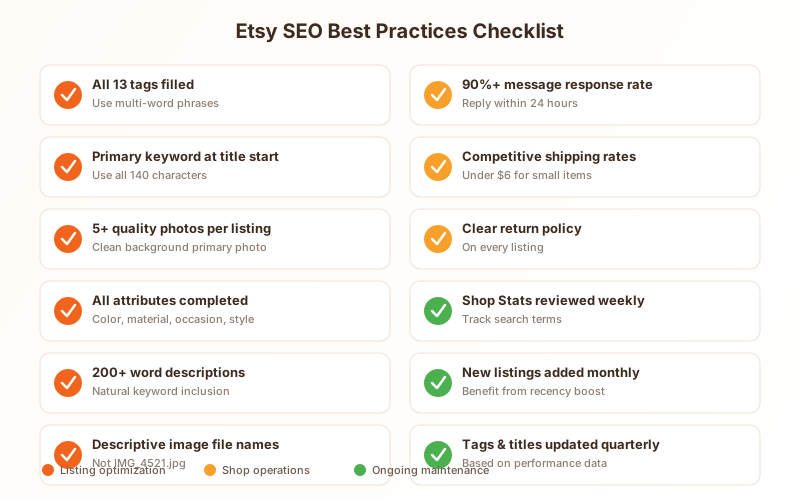
- • Research keywords using Etsy search auto-complete, Shop Stats, and tools like eRank
- • Focus on long-tail phrases with clear purchase intent
- • Map unique keywords to each listing to avoid internal competition
- • Review and update keywords quarterly based on performance data
2. Listing Refresh Schedule
- • Add new listings regularly to benefit from recency boosts
- • Update underperforming listings with new keywords, photos, or descriptions
- • Refresh seasonal listings 4-6 weeks before peak season
- • Review tag performance monthly in Shop Stats
3. Tag Management
- • Always use all 13 tag slots on every listing
- • Diversify tags across listings to capture different search queries
- • Replace tags that generate no views after 30 days
- • Use multi-word phrases, not single words
4. Customer Service Excellence
- • Respond to messages within 24 hours to maintain a strong response rate
- • Ship orders promptly and upload tracking information
- • Proactively address negative reviews with professional responses
- • Maintain a case rate as close to zero as possible
5. Shipping and Policies
- • Set competitive shipping rates, ideally under $6 for small items
- • Offer free shipping when feasible — Etsy highlights free shipping listings
- • Write clear, complete shop policies for returns, exchanges, and shipping
- • Keep processing times accurate and realistic
Practical Tips Checklist
Common Etsy SEO Mistakes
1. Using Single-Word Tags
Single-word tags like “mug,” “necklace,” or “gift” match millions of listings and almost never result in a sale. The shopper searching “mug” could want a camping mug, a novelty mug, or a corporate gift — none of which may be your product. Use multi-word, specific phrases that attract buyers who know what they want.
2. Keyword Stuffing in Titles
Cramming every possible keyword into your title makes it unreadable and can trigger Etsy’s spam filters. A title like “Mug Coffee Cup Gift Ceramic Personalized Custom Handmade Blue” matches many searches but earns few clicks because it looks unprofessional. Write natural, descriptive titles that include keywords without sacrificing readability.
3. Ignoring Long-Tail Keywords
Many sellers target only high-volume keywords and wonder why they can’t rank. High-volume terms have massive competition. Long-tail keywords like “personalized leather dog collar with engraved name” have lower search volume but much higher conversion rates because the searcher knows exactly what they want.
4. Copying Tags Across All Listings
Using the same 13 tags on every listing means all your listings compete against each other for the same searches. Diversify your tags so each listing targets a unique set of search queries. This expands your shop’s total search visibility instead of cannibalizing it.
5. Neglecting Customer Service Metrics
Etsy explicitly states that customer service quality affects search ranking. Shops with poor review ratings, slow message responses, or high case rates are deprioritized in search. No amount of keyword optimization can overcome a shop that buyers don’t trust.
6. Forgetting to Update Listings
Search trends shift, seasonal demand changes, and Etsy updates its algorithm. Listings that performed well six months ago may be declining. Review your Shop Stats monthly, identify declining listings, and refresh their titles, tags, and photos to recapture visibility.
Frequently Asked Questions
How does Etsy search work?
Etsy search operates in two phases: query matching and ranking. First, Etsy matches the shopper’s search query against listing titles, tags, descriptions, and attributes. Then it ranks the matched listings based on factors like listing quality, customer service metrics, shipping price, recency, and Context Specific Ranking (CSR) personalization. Only listings with matching keywords appear in results, and higher-quality listings rank above lower-quality ones.
How many tags should I use on Etsy?
You should always use all 13 tag slots on every listing. Each tag can be up to 20 characters, and each one represents an opportunity to match a different search query. Using fewer than 13 tags directly limits your search visibility. Use multi-word phrases rather than single words for better targeting.
How often should I update my Etsy listings?
Review your listings monthly in Shop Stats and update underperforming ones quarterly. Refresh seasonal listings 4-6 weeks before peak shopping periods. If a listing hasn’t received views in 30 days, update its title, tags, and primary photo. Adding new listings monthly also helps maintain an active shop signal.
What are the best Etsy SEO tools?
The best Etsy SEO tools include eRank and Marmalead for keyword research and competitor analysis. Etsy’s built-in Shop Stats provides data on which search terms bring traffic to your shop. Image Chat helps generate optimized listing titles, descriptions, and tag sets efficiently. Google Keyword Planner can supplement research for terms that overlap with Google search.
Does Etsy favor new listings?
Yes, Etsy gives new listings a temporary ranking boost to test how they perform with shoppers. This recency factor means regularly adding new listings can help maintain visibility. However, the boost is temporary — listings must earn their ongoing position through clicks, favorites, and sales.
How long does it take for Etsy SEO to work?
New listings may see initial traffic within 24-48 hours due to the recency boost. Meaningful SEO results from optimization changes typically take 2-4 weeks as Etsy re-indexes your listing and gathers performance data. Significant ranking improvements from a comprehensive SEO overhaul usually become visible within 30-60 days.
Can I use Google keywords for Etsy?
Google keywords can provide ideas, but search behavior differs significantly between platforms. Etsy shoppers use more transactional, product-specific terms, while Google searches are often informational. Use Etsy-specific tools like eRank or Etsy search auto-complete to find keywords that reflect actual Etsy shopper behavior.
How do I find the right keywords for my Etsy shop?
Start with Etsy’s search bar auto-complete — type your product category and note suggested completions. Check your Shop Stats for search terms already bringing traffic. Use eRank or Marmalead to check keyword volume and competition. Study top-ranking competitor listings to see which keywords they target. Prioritize long-tail phrases with moderate volume and low competition.
Start Optimizing Your Etsy Shop Now
Etsy SEO is not complicated, but it requires consistency. Start by auditing your existing listings and applying the steps in this guide. Small improvements compound across your shop.
Start Optimizing Your Etsy Shop NowRelated Resources
- Amazon A9 Algorithm Guide — Understand Amazon’s search ranking system
- Amazon Title Optimization Guide — Write product titles that rank and convert
- Amazon Backend Keywords Guide — Maximize hidden keyword fields
- Shopify SEO Guide — SEO strategies for Shopify stores
- AI Product Descriptions Guide — Create optimized descriptions with AI
- Product Description Generator — Generate SEO-friendly listing copy instantly